Beginner’s Guide To Sandhill Cranes In Nebraska (2026)
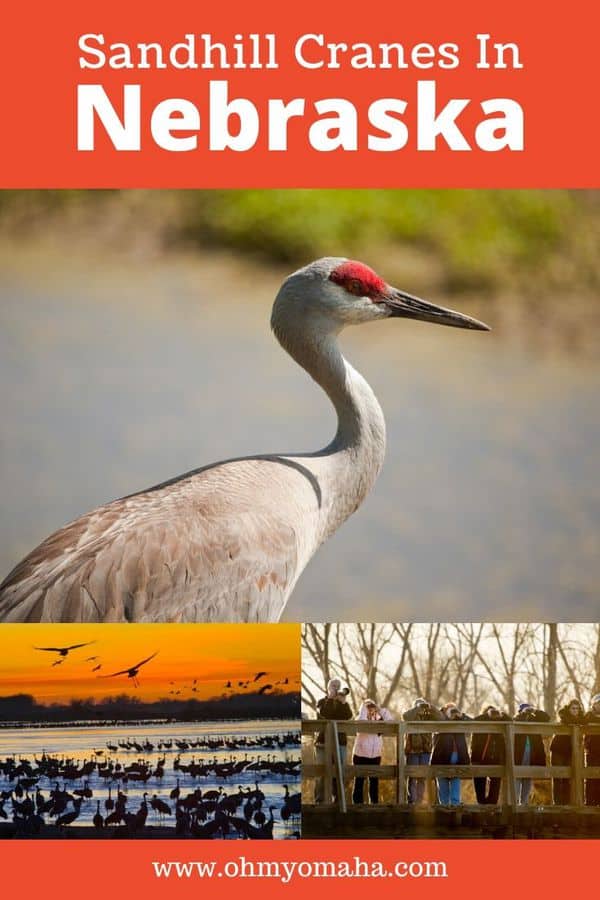
One of Nebraska’s most epic experiences is getting the chance to observe the sandhill crane migration in Central Nebraska. Bird-watchers from around the world flock to the state each spring to witness the marvel. But what about the rest of us? If you’re not a well-versed birder, here’s how to get the most out of seeing the sandhill crane migration.
Updated: This post was written in 2020 and has been updated in February 2026 with this year’s details.
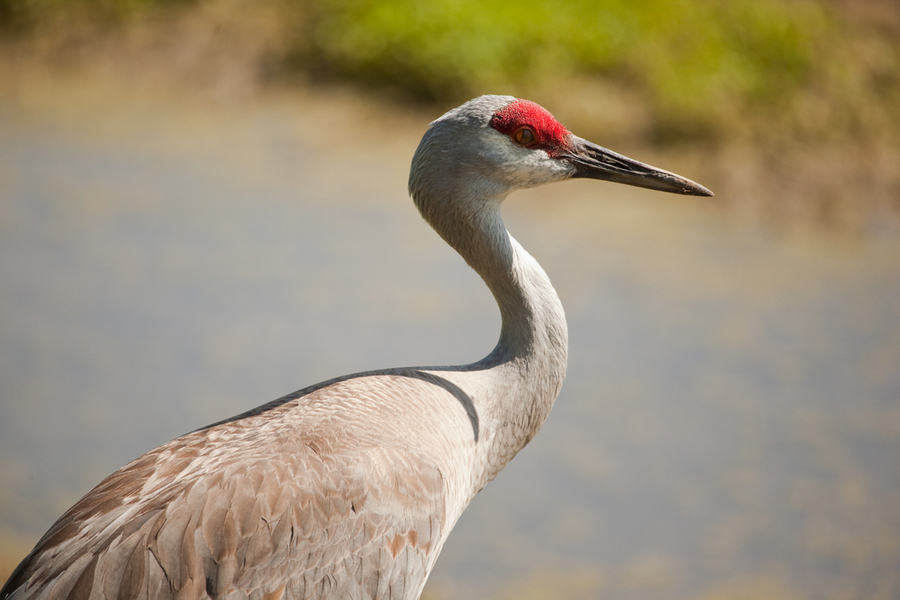
What’s so special about sandhill cranes?
Everyone says you’ve got to see the sandhill crane migration at least once. Why?
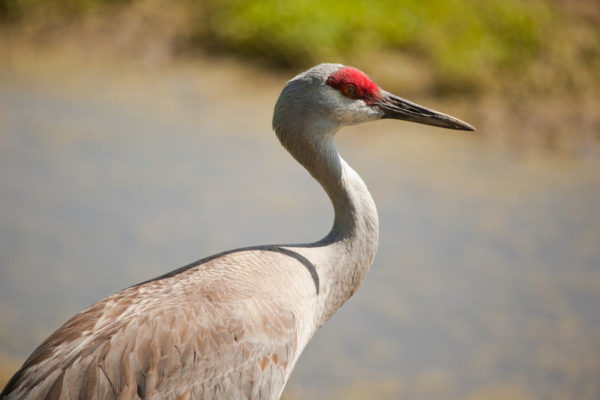
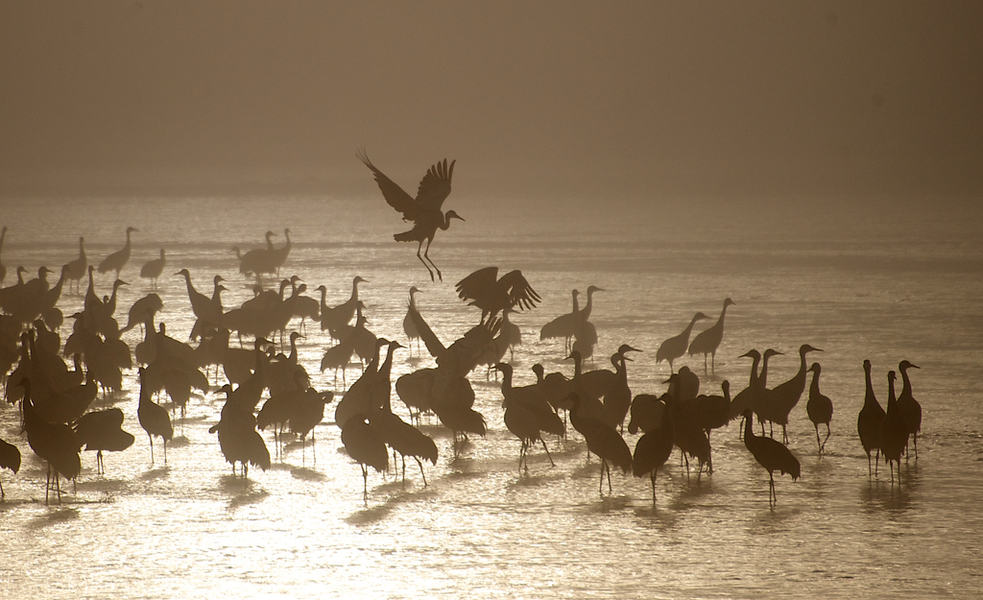
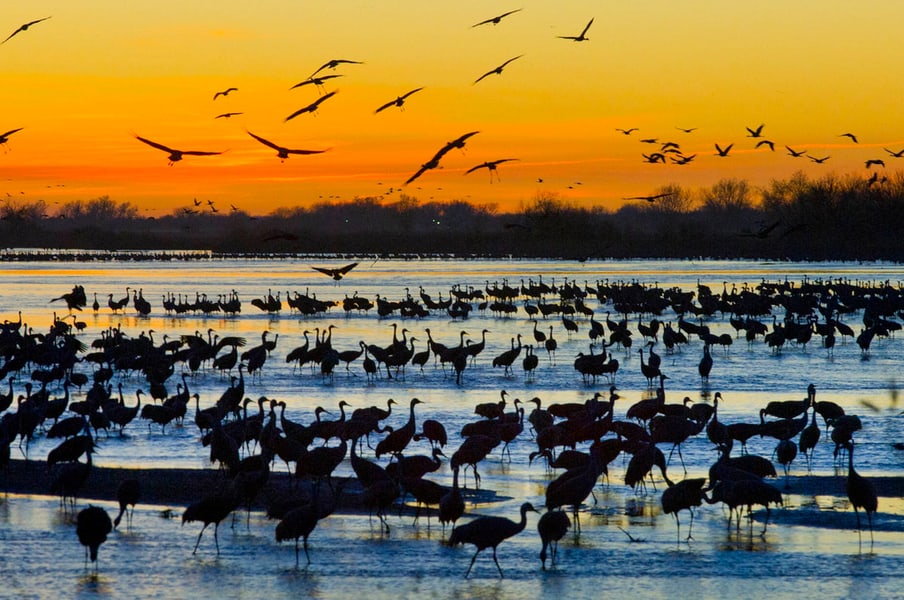
I think I read the best explanation in Smithsonian.com: “Every year 400,000 to 600,000 sandhill cranes — 80 percent of all the cranes on the planet — congregate along an 80-mile stretch of the central Platte River in Nebraska, to fatten up on waste grain in the empty cornfields in preparation for the journey to their Arctic and subarctic nesting grounds. This staging is one of the world’s great wildlife spectacles, on a par with the epic migrations of the wildebeest and the caribou.”
Why is Nebraska so important to sandhill cranes?
There’s a stretch of the Platte River in Nebraska that serves as a rest stop for hundreds of thousands of migrating cranes twice a year.
And just a heads up so you look like you know what you’re doing, there are more than just sandhill cranes to view while you’re there. There have been at least 257 species of birds observed in the Rainwater Basin including 27 species of waterfowl, 27 species of shorebirds, and five threatened and endangered species (whooping cranes, bald eagles, least terns, piping plovers, and peregrine falcons).
Where are the best places in Nebraska to see the sandhill cranes?
There are several communities in central Nebraska that are prime starting points for sandhill crane viewing. Kearney, Neb., is known as the Sandhill Crane Capital of the World…for good reason. By all accounts, the most cranes seem to arrive in that area (like 400,000 to 600,000).
Rowe Sanctuary in Kearney has indoor viewing, crane behavior basics, speaker series, school field trips and family viewing nights. I like that Rowe Sanctuary is so near Kearney, because there is plenty of things to do after you seen the cranes so you can make an overnight or weekend of it. Plus, Rowe Sanctuary has several programs planned this year, including a speaker series, story times and art workshops.
One of the highlights is Crane Season Celebration: Braided In Unison A Conversation With Amy Tan And John Muir Laws on March 21, though it’s not held at the sanctuary. It will be held at the Younes Conference Center in Kearney, Neb.
Of course, places like Grand Island or North Platte are not to be overlooked. You’ll still see hundreds of thousands of cranes there in March, too.
When is the sandhill cranes’ migration in Nebraska in 2026?
The cranes usually start arriving in mid-February continue in waves until in mid-April. The peak is typically the last week of March. But with the warmer-than-average weather patterns Nebraska has been having, the bulk of the birds may arrive a little earlier.
Are there sandhill crane viewing tours?
Of course, there are bird-watching tours! There are some that you’ll have to get up at the crack of dawn to take advantage of (as well as overnight options). And then there are the options for a guided experience for the average person who isn’t a major birder.
The Nebraska Audubon Crane Season Tour Dates are set for 2026 for tours at Rowe Sanctuary in Kearney. These include the guided crane viewing experience offered from March 4 to April 7.
There’s also guided photography experiences at Rowe Sanctuary. Reservations may be made online or by calling (308) 468-5282. Prices vary. The guided crane photography experience is offered between March 14 through April 14, 2026.
The overnight photography experience is available for a shorter period of time. You can make a reservation between March 31 through April 3, 2026. The overnight experience costs quite a bit more, but it also gives you the chance to photograph the cranes as they fly into the river at dusk and lift away at dawn.
In North Platte, Dusty Trails LLC offers bus tours, as well as morning and evening blind tours. During their bus tour, they share information about the Sandhill Cranes, their migration and behaviors in the fields. Dusty Trails’ Tours are $45 per person and last between two and a half hours and three and a half hours.
Where are crane viewing sites?
I remember my parents taking us kids on a wild ride one year, trying to find the birds and it was just the most unimpressive experience. I remember standing in a field, shivering, just to see about a dozen birds and wondering what the big deal was. Clearly, my parents hadn’t researched where we needed to go…or we were lost and not at a legit viewing site.
Save yourself the bad memories and go to one of these sites instead:
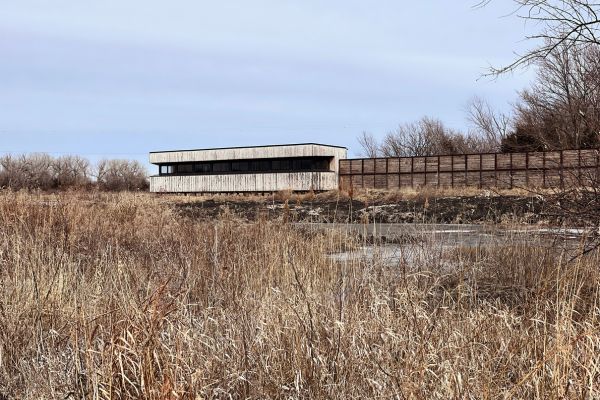
One of your best bets to not only learn about cranes, but see them, is to head to the Crane Trust Nature & Visitors Center (located at 9325 S. Alda Road in Wood River, Neb.). It’s down a dirt road and you might think you’re headed the wrong way…you’re not. Keep going!
Here, you can see the displays and then head outdoors to the 35-foot observation tower and the 10 miles of nature trails along the Platte River. Some trails may be closed to protect cranes that are roosting or loafing.
- For sunrise and sunset viewing near Kearney, go to Fort Kearny Bridge spanning the Platte River. You’ll need a state park permit to get into the Fort Kearny State Recreation Area. The address is 1020 V Road, Kearney, Neb.
- A free option is located just off the Interstate 80 exit to Gibbon. To get to the Plautz Viewing Platform, take Exit 285 and drive 1 ½ miles south. The Central Platte Natural Resource Department has view decks set up for a good view of the sandhill cranes, as well as herons, egrets, and pelicans. Parking is free.
- CPNRD also has a view site set up near Alda, Neb. Take the Interstate 80 Exit 305 to Alda and drive 2 miles south. Find three roadside turnouts south and east of the Alda interchange on Platte River Drive, and west of Rowe Sanctuary on Elm Island Road.

Is there bird watching etiquette?
Good question. Since we’re all non-birders here, I’m guessing this is on everyone’s mind. Of course there’s etiquette.
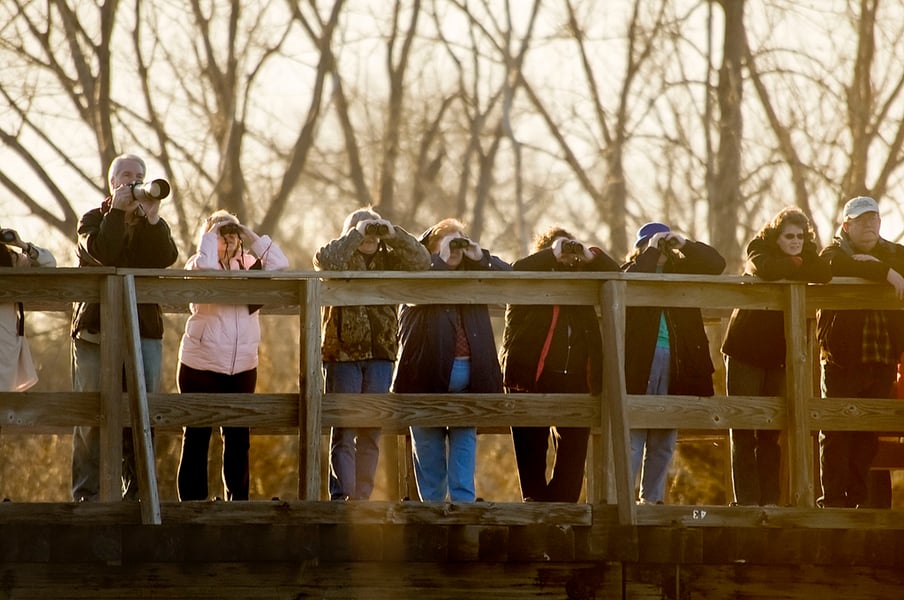
I had to research it, though, since I’m a novice. Luckily, there are sites like Nebraska Flyaway and visitors bureaus to explain it to us.
Here’s what not to do:
- DON’T stop on roadways, driveways or gated entry.
- DON’T stop abruptly in the road, either. The person behind you may not be as eager as you to see the cranes.
- DON’T attempt to approach the birds in the field. “One alarm call from a bird can send the entire flock into a panicked flight using up precious energy reserves.”
- DON’T harass the cranes by honking your horn, flashing your lights, or yelling. It’s illegal, plus it annoys everyone else.
- DON’T use flash photography.
Here’s what to do:
- Always obtain permission before entering land – most land in the Platte River Valley is private property. It’s trespassing if you don’t have permission.
- Respect the rights of people who live and work in the area.
- Silence your phone.
- Stay in your car or right next to it. Migratory waterfowl are used to being hunted by humans, so your car acts as a blind.
- Plan for the weather. It can get cold in Nebraska and the weather changes quickly in the late winter and early spring.
What should I bring for sandhill crane viewing in Nebraska?
I mentioned earlier that Nebraska weather can be fairly unpredictable, but a safe bet is to assume it will be cold and windy. Wear warm, seasonally appropriate clothing. Hats, gloves, thermal underwear, heavy coats and outerwear and sturdy boots are recommended.
Some tours will have a few binoculars available to share with others, but if you have your own binoculars, bring them. I’m new to birding and use Timorn binoculars, which comes with a photo adaptor so I can take pictures. I don’t use the tripod, though.
If you book any overnight experience, like the overnight photography tour, it’s recommended that you bring two sleeping bags per person, foam or insulated pads, extra clothing, and warm drinks and food.